Academic programme

Early Years Foundation Stage (EYFS)

Aspire's Early Years Foundation Stage combines play-based learning, strong routines, and a caring start to school life.

Practical next step

Compare the stage fit first, then settle the decision through a family visit and a clear admissions conversation.

EYFS Ages 3-5 years
Aspire's EYFS stage is built around belonging, language, movement, and play with purpose. Children aged three to five need a school start that feels reassuring and well structured, and this phase is designed to provide exactly that while laying strong foundations for primary school.
Early Years Foundation Stage (EYFS)

Subjects

Communication and Language
Personal, Social and Emotional Development
Physical Development
Literacy
Mathematics
Understanding the World
Expressive Arts and Design

Aspire's Early Years Foundation Stage is designed for children who need security, curiosity, movement, and conversation to sit side by side. The programme follows the Cambridge-aligned British pathway while preserving the warm, play-based culture families expect from a strong early years environment. Children learn through carefully prepared routines, guided exploration, storytelling, sensory work, and shared experiences that help them feel confident in school from the very beginning.

The seven areas of learning shape daily practice across the phase. Communication and language are strengthened through talk, listening, questioning, songs, and story work. Personal, social, and emotional development is supported through classroom routines, relationships, independence, and self-regulation. Physical development is woven into fine-motor and gross-motor opportunities, while early literacy and mathematics are introduced through meaningful, practical experiences rather than abstract drills.

Aspire also treats Arabic identity as part of the children's daily world, not an optional extra. Children encounter language, stories, and cultural references in ways that feel age-appropriate and joyful. Understanding the world and expressive arts and design give pupils room to observe, make, imagine, and reflect, helping them connect new knowledge to real life.

By the time children move into primary, they not only know more, they feel ready for the expectations of the next stage. Aspire's EYFS approach builds school readiness through belonging, communication, emerging academic habits, and confidence with adults and peers.

How children learn

A day built for young learners.

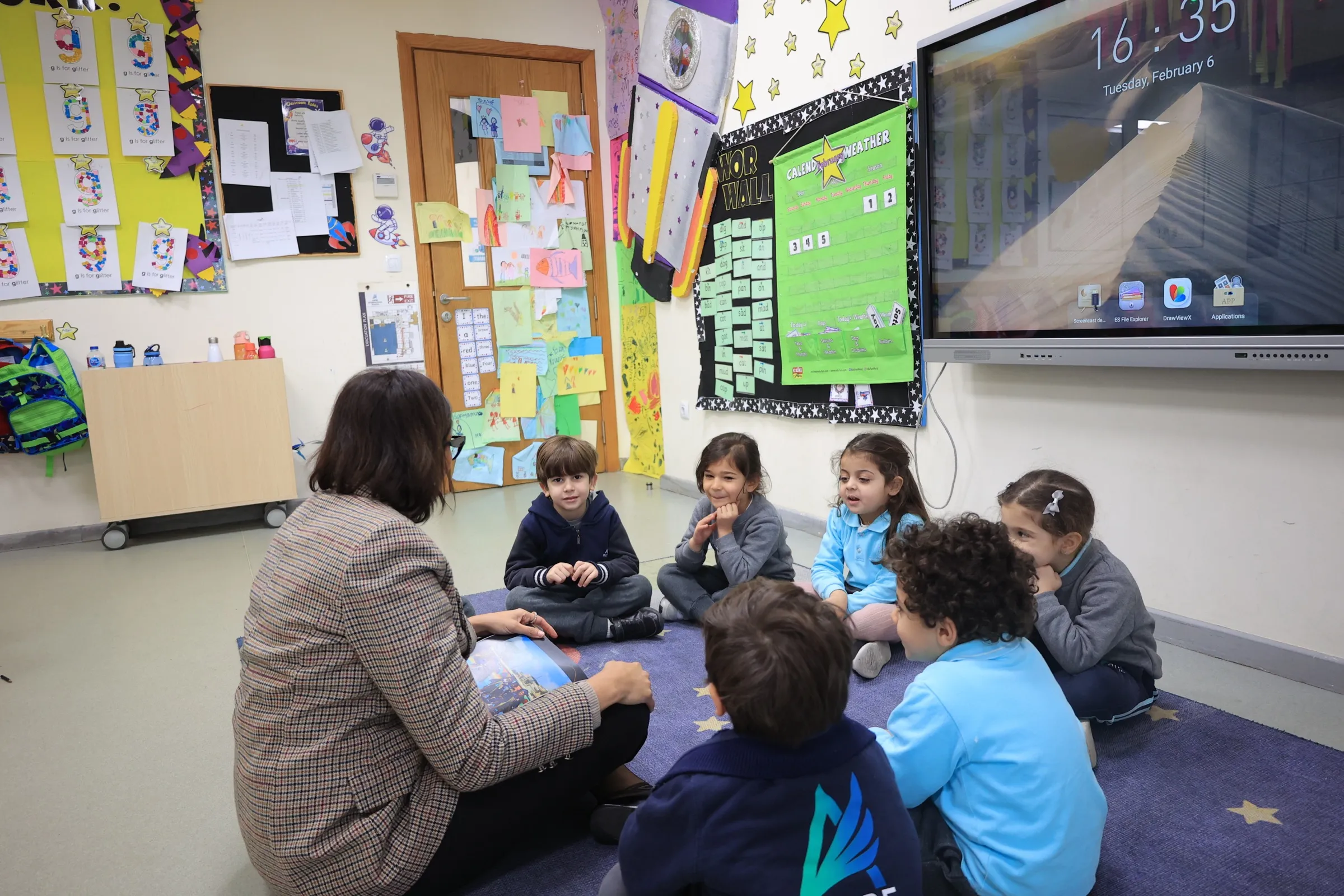
Each day balances direct teaching, guided practice, and child-initiated exploration. Warm, language-rich classrooms encourage speaking, listening, and vocabulary growth at every turn.

Daily practice

  • Structured routines that balance teaching, guided practice, and exploration
  • Language-rich classrooms encouraging speaking, listening, and vocabulary growth
  • Continuous provision that helps children revisit concepts through purposeful play
  • Shared routines that develop independence, responsibility, and confidence
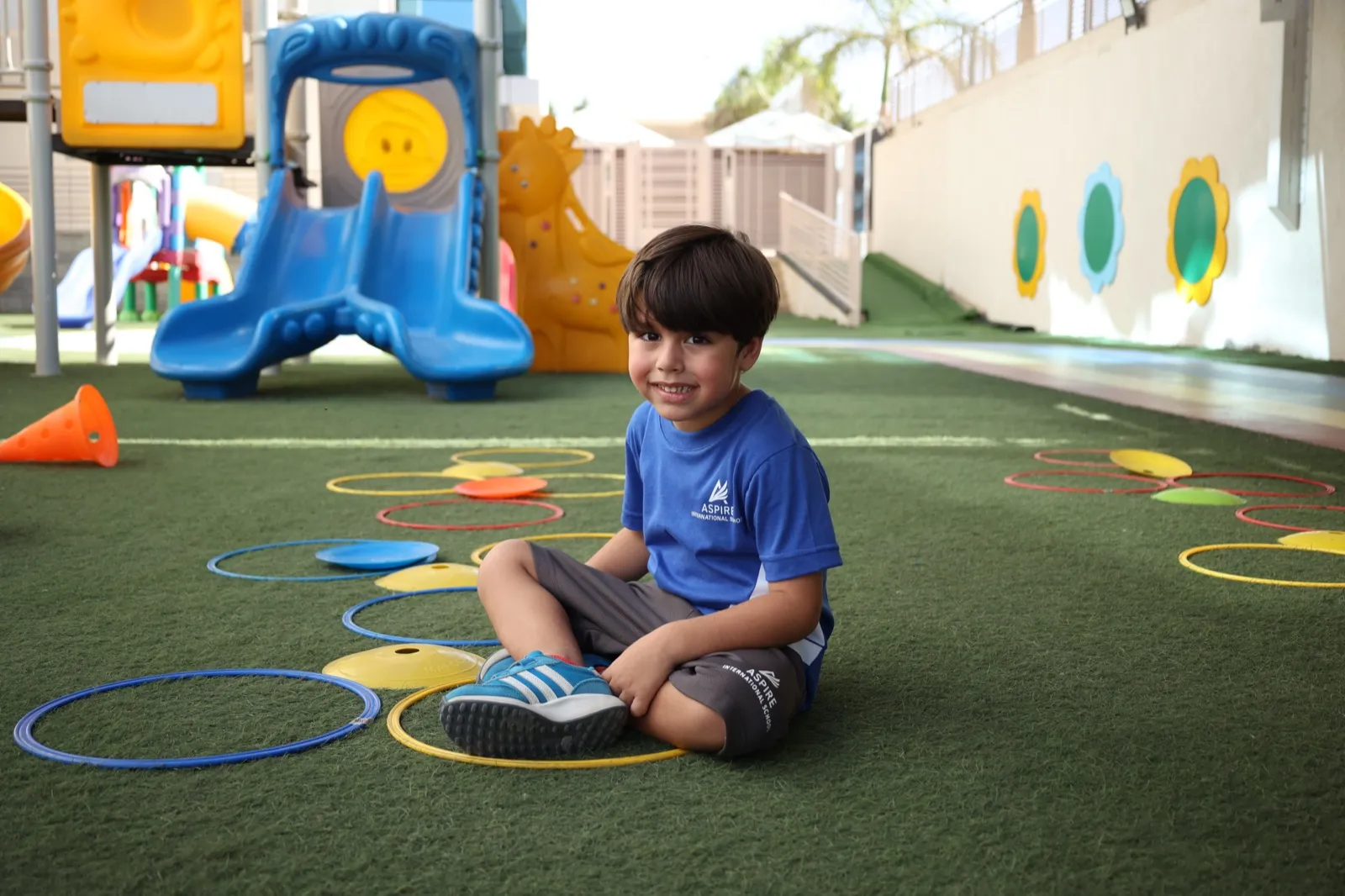
Children playing and learning outdoors on the Aspire campus

Assessment

Observation-led and built around the child.

EYFS assessment is based on classroom observation, learning journals, discussion, and the everyday evidence children produce through guided and independent activity. This helps teachers plan the next steps with care rather than reducing development to one-off tests.

Key features

  • Learning journals and continuous classroom evidence
  • Regular communication with families about readiness and development
  • Focus on progress across the seven EYFS areas of learning

What makes Aspire EYFS distinctive

A curriculum designed for this stage, not borrowed from older year groups.

Two features of the Aspire early years programme stand out: a purposefully structured EYFS curriculum that goes beyond standard provision, and a social and emotional learning strand woven through the entire stage.

Structured EYFS curriculum

The EYFS curriculum at Aspire is built with more intentional structure than the minimum British framework requires. Daily routines, learning sequences, and the environment itself are designed to support early literacy, numeracy, and language in a way that prepares children well for Year 1 without rushing them through childhood.

Social and emotional learning (SEL)

A dedicated SEL programme runs through the Aspire EYFS stage. Children work on recognising feelings, developing self-regulation, building friendships, and resolving conflict — skills that underpin academic confidence as much as personal happiness. The programme is structured, age-appropriate, and embedded in the daily rhythm rather than treated as a separate subject.

Why it matters

Children who leave EYFS with strong language, emotional self-awareness, and structured learning habits enter primary school better equipped — not just academically, but in the classroom resilience and social confidence that makes the whole experience easier to navigate.

Next step

Ready to start your child's learning journey?

Speak with the admissions team, compare year-group readiness, and plan a family visit.

Open WhatsApp chat